
Why Choose The Howard Company?
Why Choose The Howard Company?
Table of Contents
The partner you choose for signage and drive-thru shapes how every customer sees your brand, and how much you'll spend keeping it that way for years to come. Most providers handle one piece: the software, the screens, or a single structure. The Howard Company handles the whole storefront.
We're a 100% employee-owned company founded in 1950, designing, branding, and installing signage, drive-thru systems, menu boards, kiosks, and interior branding for brands across restaurants, convenience and fuel, dispensaries, banks and credit unions, grocery, and emerging retail, all under one contract and one project manager.
Below, see how Howard compares to other providers side by side, what sets our equipment and software apart, and why brands in your industry choose us.
How Howard Compares
This chart compares product and feature capabilities to different vendors across top drive-thru and digital signage providers to find the right fit for your business objectives.
Last Updated: June 23, 2026
| Products | The Howard Company | DSA Signage | Everbrite | LSI Digital Signage | Novisign | Origin Menu Boards | Palmer Digital | Stratacache | Stream Signage | Unistructures | Visual Graphic Systems | WAND Digital | Xenial |
|---|---|---|---|---|---|---|---|---|---|---|---|---|---|
| Drive-Thru Menu Boards | ✓ | ✓ | ✓ | ✓ | ✓ | ✓ | ✓ | ✓ | ✓ | ✓ | ✓ | ✓ | ✓ |
| Canopies | ✓ | ✓ | ✓ | ✓ | – | ✓ | ✓ | – | ✓ | ✓ | – | – | – |
| Clearance Bars | ✓ | ✓ | ✓ | ✓ | – | ✓ | ✓ | – | – | ✓ | – | – | – |
| Speaker Posts | ✓ | ✓ | ✓ | ✓ | – | ✓ | ✓ | – | ✓ | ✓ | – | – | – |
| Directional Signs | ✓ | ✓ | ✓ | – | ✓ | ✓ | – | ✓ | – | ✓ | ✓ | – | – |
| Brand Boosters | ✓ | – | ✓ | – | ✓ | ✓ | – | ✓ | – | – | – | – | – |
| Tip Jars | ✓ | – | – | – | – | – | – | – | – | – | – | – | – |
| Headset Systems | ✓ | – | – | – | – | ✓ | – | – | ✓ | – | – | – | – |
| Indoor Menu Boards | ✓ | ✓ | ✓ | ✓ | ✓ | ✓ | ✓ | ✓ | ✓ | – | ✓ | ✓ | ✓ |
| AI Voice Integration | ✓ | – | – | – | – | – | – | ✓ | – | – | – | – | ✓ |
| Kiosks | ✓ | ✓ | ✓ | ✓ | ✓ | – | ✓ | ✓ | – | – | ✓ | – | ✓ |
| Register Shrouds | ✓ | – | – | – | – | – | – | – | – | – | – | – | – |
| Window Graphics | ✓ | – | ✓ | – | ✓ | ✓ | – | ✓ | – | – | ✓ | – | – |
| Interior Design | ✓ | ✓ | ✓ | – | – | – | – | – | – | – | ✓ | – | – |
| Video Walls | ✓ | ✓ | ✓ | ✓ | ✓ | – | ✓ | ✓ | – | – | ✓ | ✓ | – |
| Exterior Signs | ✓ | ✓ | ✓ | – | – | ✓ | – | ✓ | – | – | ✓ | – | – |
| Digital Content Management | ✓ | – | ✓ | ✓ | ✓ | – | ✓ | ✓ | – | – | ✓ | ✓ | ✓ |
| Design Services | ✓ | ✓ | ✓ | ✓ | ✓ | ✓ | ✓ | ✓ | – | – | ✓ | ✓ | ✓ |
| Active Monitoring | ✓ | – | – | – | ✓ | – | ✓ | ✓ | – | – | – | – | – |
| Graphic Fulfillment | ✓ | – | – | – | – | – | – | – | – | – | – | – | – |
| Installation Services | ✓ | ✓ | ✓ | ✓ | – | ✓ | ✓ | ✓ | ✓ | ✓ | ✓ | ✓ | – |
| POS Systems | – | – | – | – | – | – | – | – | – | – | – | – | ✓ |
| Kitchen Management | – | – | – | – | – | – | – | – | – | – | – | – | ✓ |
Want the full story behind the checkmarks?
See how The Howard Company stacks up against the providers in this chart, side by side.
Manufacturing Quality
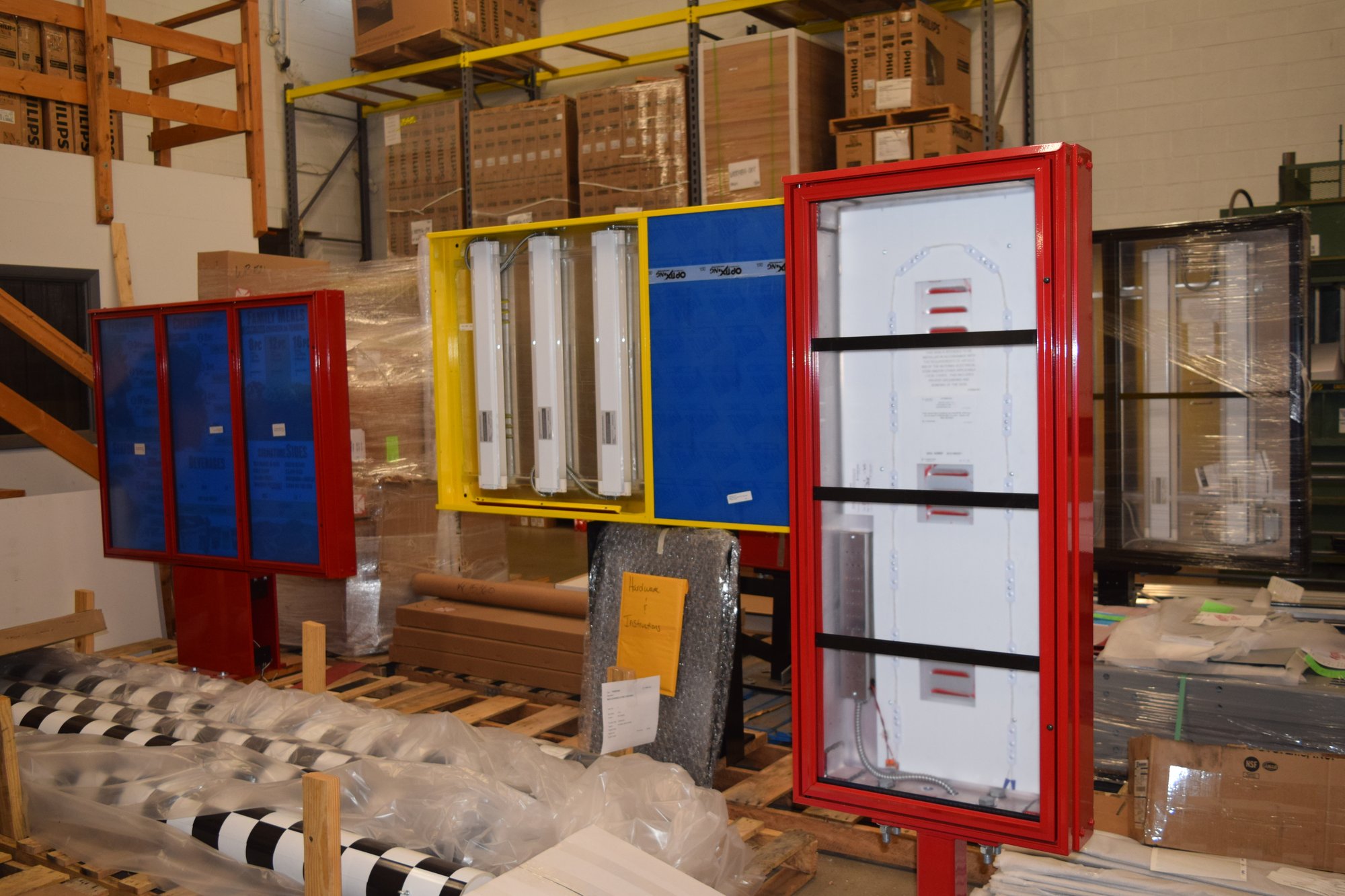
Structural steel is engineered to site-specific wind loads, and an industrial powder-coat finish rated for 15 to 20+ years is roughly three times harder than paint and holds color in direct sunlight for 10+ years with no repainting. Quality is engineered in from the first drawing, so what goes up keeps performing long after the install crew leaves:
-
Structural steel engineered to site-specific wind loads
-
Industrial powder-coat finishes rated 15–20+ years, 3× harder than paint, and holds color 10+ years in direct sunlight, no repainting required
-
Every unit inspected and powered up before leaving the facility
-
Result: The Howard Company's equipment is still standing and looking professional 15–20 years after installation
Software-Agnostic
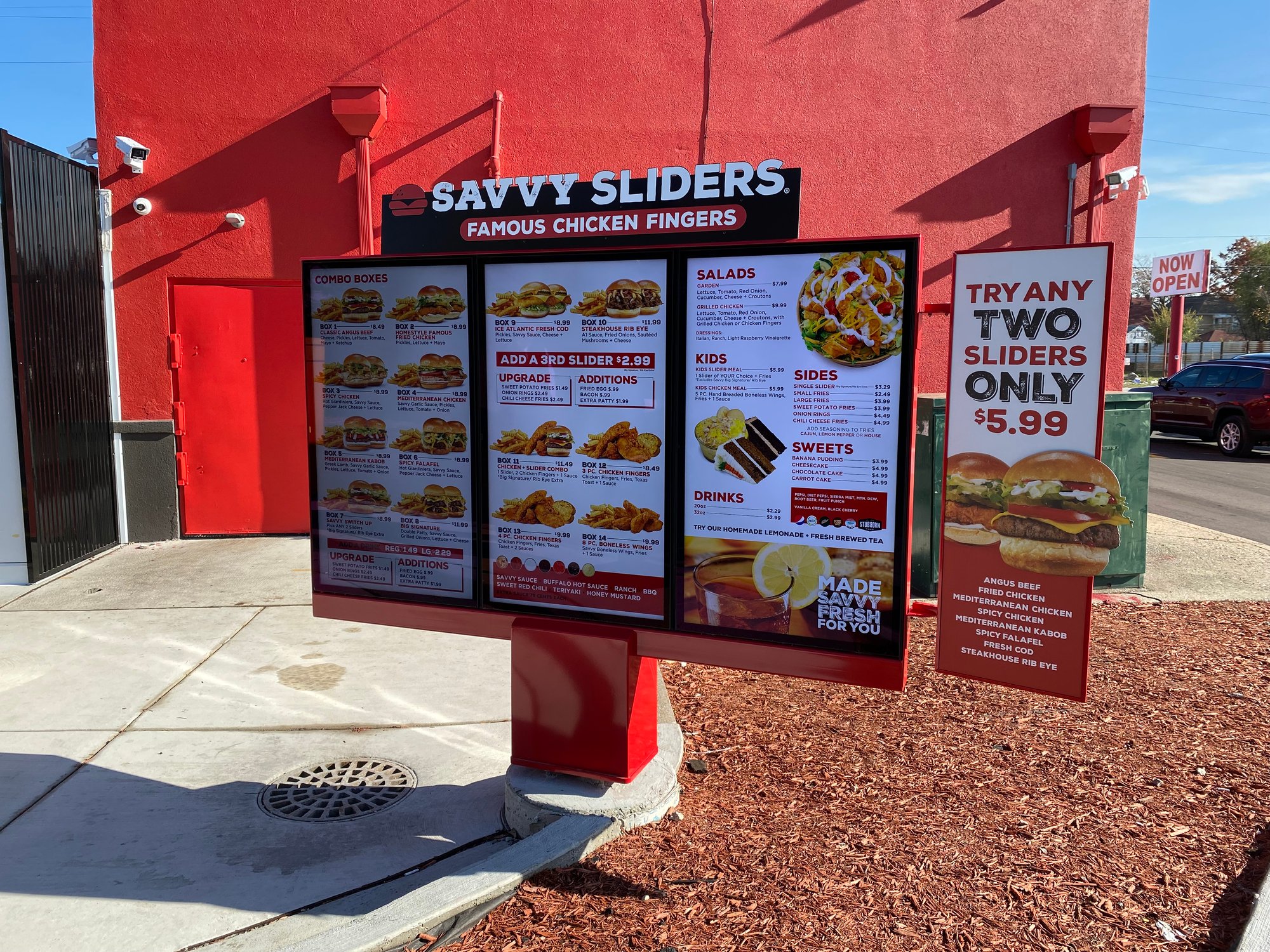
The best content management system for your stores is the one that fits your POS, your team, and your budget, not the one a vendor happens to sell.
The Howard Company stays platform-neutral, so you get the right tool instead of the only tool, and you're free to change direction later without tearing out your screens:
- CMS-agnostic, so you're not locked into a single platform
- The Howard Company works with Navori, Nanonation, and Neon
- Software recommendation is matched to your POS system, team bandwidth, goals, and budget
- Guided selection process so you make a confident decision before you commit
Proven Results
The real test of a partner is what happens after launch, across dozens or hundreds of locations. The Howard Company runs multi-location programs end to end: site surveys, permitting-ready engineered structures, scheduled install waves, branding and interior packages, and centralized content management across every location.
Proof points:
- Reimagined the drive-thru experience for Peoples Bank & Trust, rolling out signage at 13 locations at once
- Runs national digital and static menu board programs for brands like Scooter's, Landmark Credit Union, Golden Chick, Slim Chickens,Love's Travel Stops, and more
- Provide full branding packages for brands like PJ's Coffee of New Orleans, Charley Cheesesteak's, Rita's Italian Ice, Arby's, and more
- Pairs signage and structures with full branding, interior design, and merchandising, so a location opens with a complete, consistent look, not just new screens
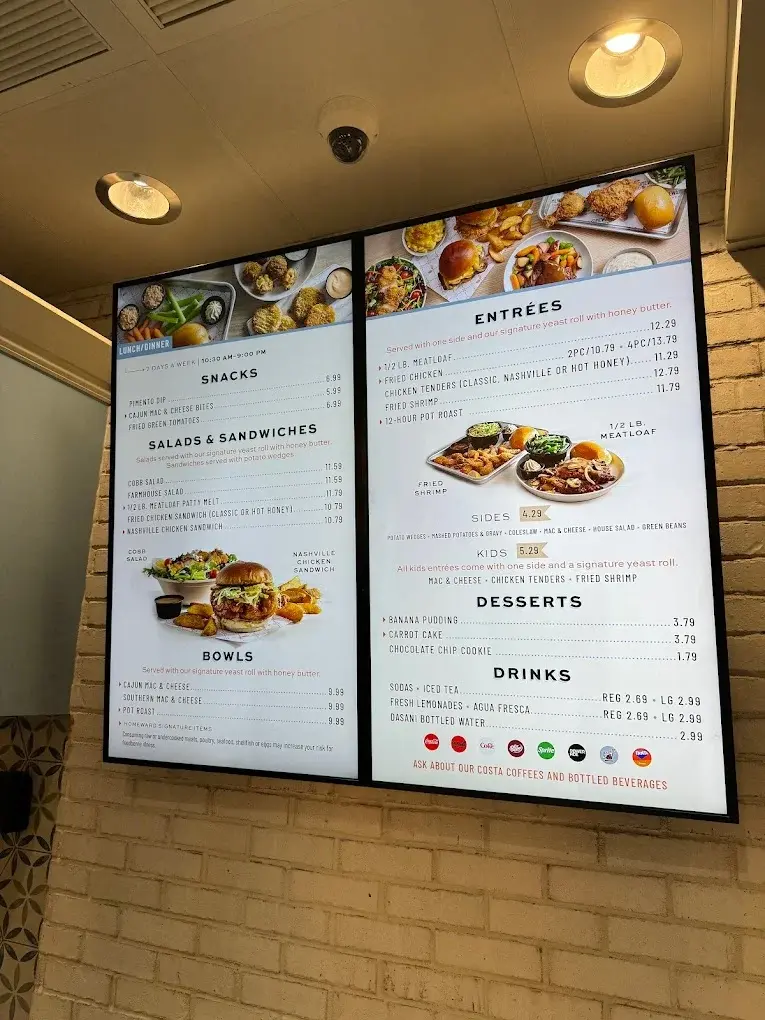
"I work for the equipment division for a nation wide chain. We have never utilized digital menu boards and since we design and procure our static menu boards from The Howard Company, I reached out to them.
It was a very complicated construction project and they were excellent. The sales team worked through all the equipment and service and the installation team was outstanding. With any construction project, crazy things come up but the day of install, their team was on top of every issue and worked through with our contractors and project coordinator effectively and efficiently.
The quality of the menu boards is excellent and works so well with our POS. We have been very pleased with the services provided. And of course, we have been utilizing The Howard Company for many years for our static menu boards and have thoroughly enjoyed working with their team."
Sarrah Goldschmidt;
Equipment Group Specialist, Golden Corral/Homeward
Frequently Asked Questions
Why choose The Howard Company for signage and drive-thru?
Because you get one partner for the whole storefront instead of a stack of vendors to referee. Howard designs, brands, and installs your indoor and exterior signage, digital menu boards, kiosks, and full drive-thru system, with in-house engineering and software that isn't chained to one platform. One contract, one project manager, one team on the hook for a result that actually works.
How does The Howard Company compare to competitors like WAND Digital, Everbrite, and Stratacache?
The Howard Company offers the broadest product and service set of any provider in the comparison.
WAND Digital focuses on digital menu boards but does not offer canopies, clearance bars, speaker posts, headset systems, AI voice integration, kiosks, or graphic fulfillment.
Everbrite offers hardware but lacks AI voice integration, active monitoring, and graphic fulfillment.
Stratacache offers digital signage and AI voice but does not offer canopies, clearance bars, speaker posts, headset systems, or graphic fulfillment.
Howard is the only provider that manufactures its own structural components in-house, is CMS-agnostic, and offers tip jars, register shrouds, headset systems, and graphic fulfillment alongside full installation.
What makes The Howard Company's equipment last longer than competitors?
It's engineered and finished to survive where it lives. Structural steel is built to your site's wind loads, and the industrial powder-coat finish is rated 15 to 20+ years, three times harder than paint, and holds color in direct sun for a decade without repainting. Every unit is tested and powered up before it ships, which is why so much Howard equipment still looks sharp 15 to 20 years later.
Is The Howard Company locked into a single CMS platform?
he Howard Company is software-agnostic and does not lock customers into a single platform.
Howard works across Navori, Nanonation, and Neon, plus its own OCS for the drive-thru, and matches the right one to your POS, team, and budget.
Switch POS or CMS down the road and Howard adapts the software without ripping out your hardware.
Does The Howard Company offer installation services?
Yes and they offer it nationwide. The project manager who scopes your job also owns the install, from site survey to the final powered-on screen, including hiring and managing the crews.
How long has The Howard Company been in business?
The Howard Company has been in business since 1950, giving them 75+ years of experience connecting brands with their customers. Howard is also 100% employee-owned, which means the people building and installing your project have a personal stake in getting it right.
Does The Howard Company offer AI voice integration for drive-thrus?
Yes. The Howard Company offers AI voice ordering and OCS Order Confirmation System, so guests see their order on screen and catch mistakes before the food is made, a capability only a handful of providers on the chart offer.
Does The Howard Company handle multi-location rollouts?
Yes, The Howard Company runs multi-location rollouts end to end, from site surveys, permitting-ready engineered structures, scheduled install waves, and centralized content across every location, so a 50-store or 500-store rollout stays consistent and on schedule.
Howard has executed programs for brands like Shake Shack, Peoples Bank and Trust, Scooter's, Landmark Credit Union, Golden Chick, Love's Travel Stops, PJ's Coffee of New Orleans, Charley Cheesesteak's, Rita's Italian Ice, Arby's, and more!
SHARE