
In-Store Retail Media: Earn Ad Revenue From Your Screens
In-store retail media turns the screens in your store into paid ad space, sold to the brands on your shelves. You set the rates and keep the revenue. The Howard Company supplies the displays and sets up the software. This guide covers how the model works and what to check before you start.
At a Glance
-
How screens earn: Brands pay per 1,000 views (CPM) or buy a share of the loop. Programmatic exchanges fill the unsold time.
-
Where it pays most: The closer the screen is to the purchase, the higher the rate. Checkout leads, then endcaps, entrance and aisle.
- How big it is: Digital screens took 34% of US out-of-home ad spend in 2024, according to the OAAA.
- What you need: Commercial-grade screens, software that logs proof of play, a way to measure the audience and someone to sell the space.
- Who it fits: Grocers, convenience stores and other retailers, from one store to a national chain. You can start with one zone.
- What The Howard Company doesn't do: Sell the ads or take a share of your revenue.
What is in-store retail media?
In-store retail media is the practice of selling ad space on a store's own screens, most often to the suppliers whose products are already on its shelves.
A beverage maker pays for the screen at checkout. A snack company pays for the endcap display. The retailer sets the rates and keeps the revenue.
It grew out of digital out-of-home advertising, the same category as airport and billboard screens, but placed where the buying decision happens. Large chains built the first networks. It now reaches regional grocers, convenience operators, and other retailers because commercial screens are affordable and the software can handle the ad selling and billing that once required an in-house ad-tech team. Guideline projects US digital out-of-home spend will grow 14.5% in 2026, the highest rate of any out-of-home segment.
The Howard Company supplies the displays and configures the software that makes this possible. The retailer sells the space and keeps the revenue.
How does a screen actually earn money?
Screens earn money by charging advertisers for screen time, priced the way digital advertising is priced everywhere.
CPM (cost per thousand impressions)
The advertiser pays for every 1,000 shoppers estimated or verified to see the ad. This is the standard unit.
Share of voice
An advertiser buys a set share of the loop, such as one slot in six, or category exclusivity so no rival product runs on the same screens.
Programmatic
Ad exchanges buy unsold screen time automatically and fill it, so inventory you have not sold directly still earns.
None of this works without software that can track what played and when. That playback log is what an advertiser is billed against, and The Howard Company treats it as the line between a retail-media-capable system and a basic signage player.
What do you need to run in-store retail media?
Four things: screens in high-traffic zones, software that can sell and log ad time, a way to measure the audience, and someone to sell the space.
| LAYER | WHAT IT DOES | NOTES |
|---|---|---|
| Screens and mounts | Displays at checkout, endcaps, entrance, aisle, fuel court | Commercial-grade panels specced by zone and traffic |
| Retail-media software (CMS) | Schedules ads, supports CPM and share-of-voice selling, connects to ad exchanges, logs playback for billing | Not every signage CMS does this. It is a specific feature set. |
| Audience measurement | Counts viewers and dwell time so impressions can be verified and priced | Camera-enabled players can do this without storing anyone's identity |
| Ad sales | Signs advertisers, sets the rate card, manages campaigns |
The retailer runs this. It is where the revenue is made. |
On the software layer, the capability matters more than the label. Platforms built for DOOH operators connect to programmatic exchanges (Vistar Media, Hivestack), support CPM and share-of-voice billing, and log proof of play. Navori, one of the systems The Howard Company deploys, offers these features. Because The Howard Company is software-agnostic, the right question is not the name on the box, but whether the platform can sell, serve, and bill the way you need. See our content management software comparison to weigh options.
What is in-store ad space worth?
There is no single published rate for in-store screens, but the zone drives the price: the closer the screen sits to the purchase, the more it earns.
For context, programmatic digital out-of-home ads averaged $7.62 per thousand impressions in H2 2024, according to Place Exchange data reported by MediaPost. These are advertising rates a retailer can charge advertisers. They are not The Howard Company product prices.
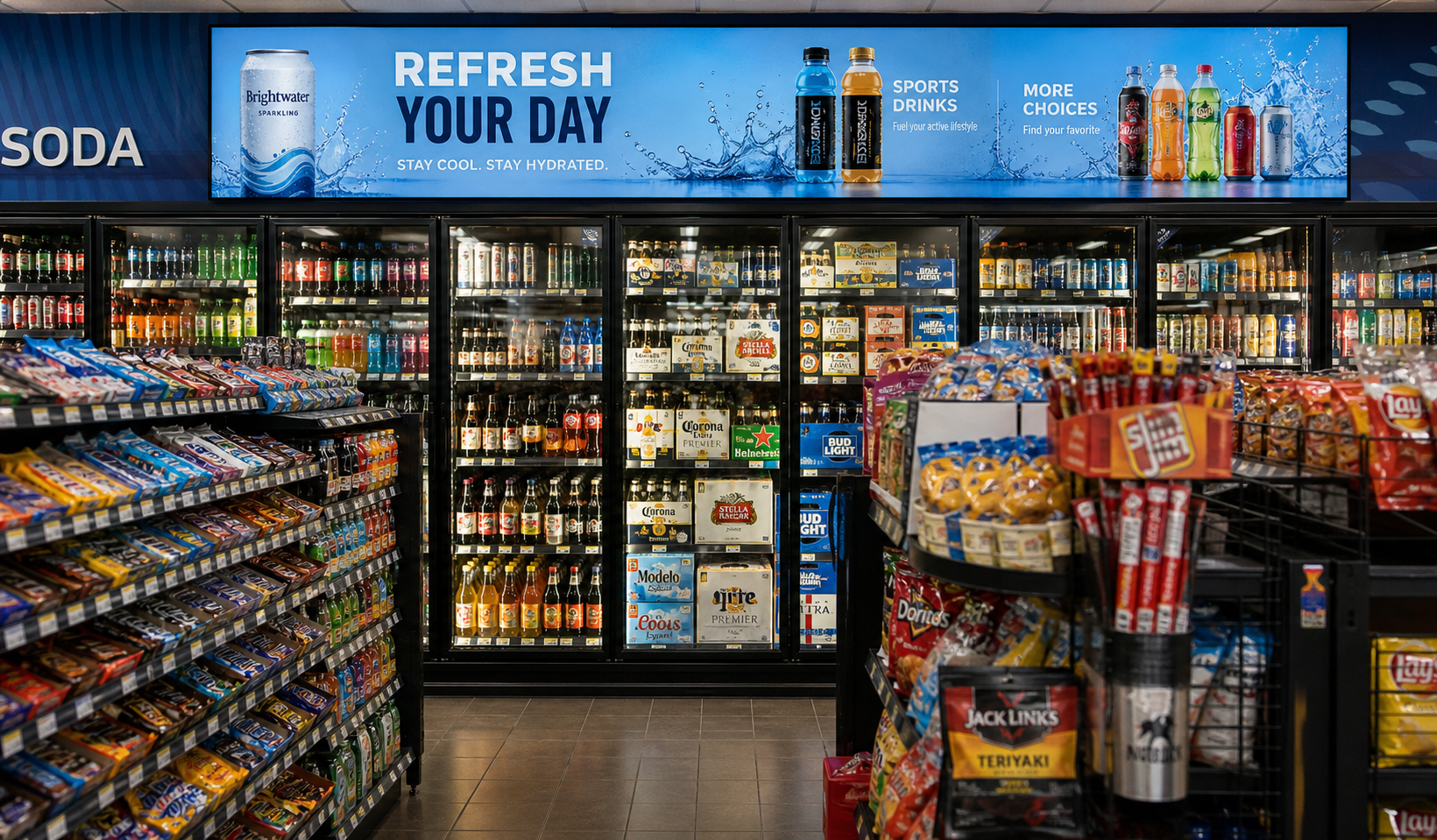
Where the value concentrates, highest to lowest:
-
Self-checkout and point of sale: longest dwell, highest purchase intent, top rate
-
Endcap and digital end displays: mid-store, strong sales lift
-
Entrance and lobby: high reach, brand awareness
-
Aisle and shelf-edge: reaches the shopper at the decision point
What a store actually earns depends on traffic, the number of screens, the zones, and how well the space is sold.
Request the Retail Media Guide to get the zone-by-zone rate estimates.
Questions to ask before you start
The Howard Company hears these questions from operators sizing up retail media, at every size of chain.
-
Does it connect to the programmatic exchanges you want, or only sell direct?
-
How is the audience counted, and does the method meet your privacy standards?
-
Which screen zones are worth wiring first for the traffic you have?
-
Who on your side will sell and manage the ad relationships?
-
Are your current displays commercial grade, or will they need upgrading to run reliably all day?
Where does The Howard Company fit?
The Howard Company supplies and installs the digital displays and sets up the software. You sell the ads and keep the revenue.
We are the build partner, not the ad agency, and not the network operator.
The Howard Company provides:
-
Display selection specced by zone and climate
-
Professional installation across your locations, one project manager
-
Configuration of a software-agnostic CMS that fits how you plan to sell
You operate:
-
Advertiser relationships and the rate card
-
Which advertisers run, in which zones, at what share of voice
-
The campaigns, and the revenue, which is yours to keep
Frequently Asked Questions
Is in-store retail media only for large chains?
No. The Howard Company builds retail media networks for regional grocers, convenience operators and independents, often faster than national chains because there are fewer layers to coordinate. You can start with one zone and expand.
Does The Howard Company sell the ads or take a share of the revenue?
No. We supply and install the screens and set up the software. You sell the ads and keep the revenue. We are paid for the hardware, the software setup, and the install and service.
What kind of software is required?
A CMS built for DOOH operators, meaning it can sell and log ad time, connect to programmatic exchanges, and support CPM and share-of-voice billing. The Howard Company is software-agnostic and can match the platform to your plan. See the CMS comparison.
Can I add retail media to screens I already have?
Sometimes. If the displays are commercial grade and the software can be added or swapped, often yes. The Howard Company can assess what carries over and what needs upgrading.
How is the audience measured so advertisers trust it?
Camera-enabled players can count viewers and dwell time to verify impressions, without storing anyone's identity. The Howard Company specs this only where it fits the store and your privacy standards.
Know what you need, but not which system fits? That's the point of being software-agnostic. The Howard Company matches the right displays, players and CMS to your environment, your POS and your team.