


How do I know if I need a preview board?
A preview board pays off fastest in drive-thrus with three things: line backups at peak hours, specials or limited-time offers that customers do not notice, and average tickets lower than they should be. If customers reach the speaker still asking what the specials are, or ordering the same default item every visit, a preview board is doing the job your main menu cannot, which is helping people decide before they pull up. It also keeps the lane moving and gives the kitchen a head start.
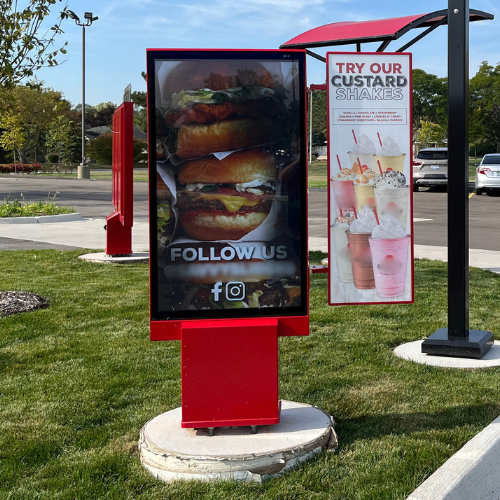
Presell Board with a wing graphic
Are digital menu boards better than static menu boards for drive-thrus?
Both work. Static menu boards have a lower upfront cost and no power or network requirements.
Digital menu boards let operators update promotions, prices, and dayparts instantly with no downtime, no printed graphic swaps, and no tools. Operators planning frequent menu changes typically see faster ROI from digital.
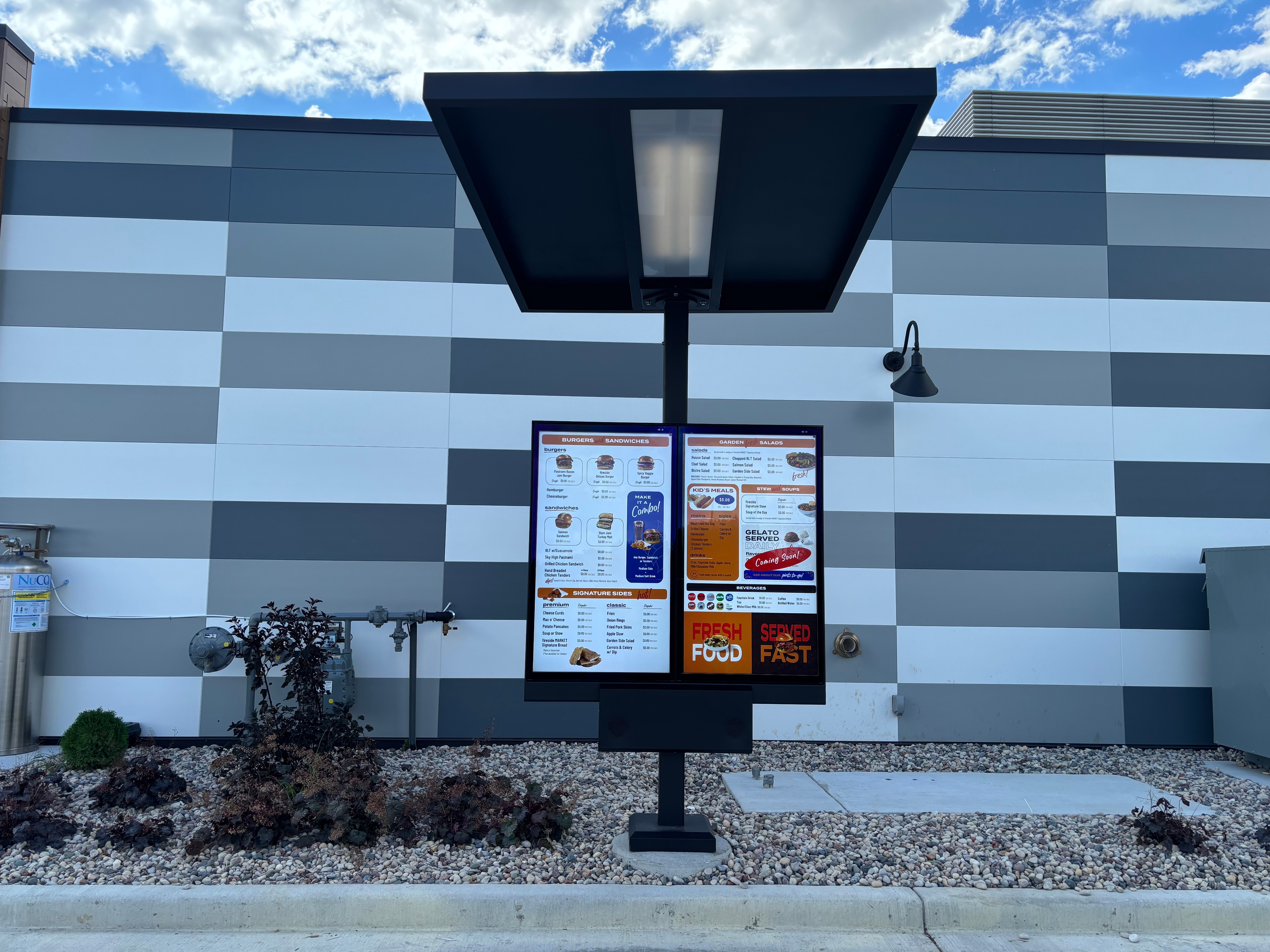
DT-FLEX-DD-AIO
Should I choose a static, digital, or hybrid menu board?
It depends on how often your menu changes, your power and network setup, and your upfront budget.
Static menu boards are a strong fit when prices and items stay stable for long stretches and you want the lowest install cost.
Digital menu boards make sense when you change promos, prices, or dayparts often enough that printed graphic swaps are slowing you down.
A hybrid menu board combines printed graphics and digital screens in the same cabinet, which lets you keep stable items static while running specials, prices, and dayparts on the digital portion.
The Howard Company DT-FLEX line takes that one step further: you can start with a static or hybrid cabinet today and upgrade the same hardware to fully digital later without ripping out the foundation, so you can phase the investment as your menu strategy evolves.
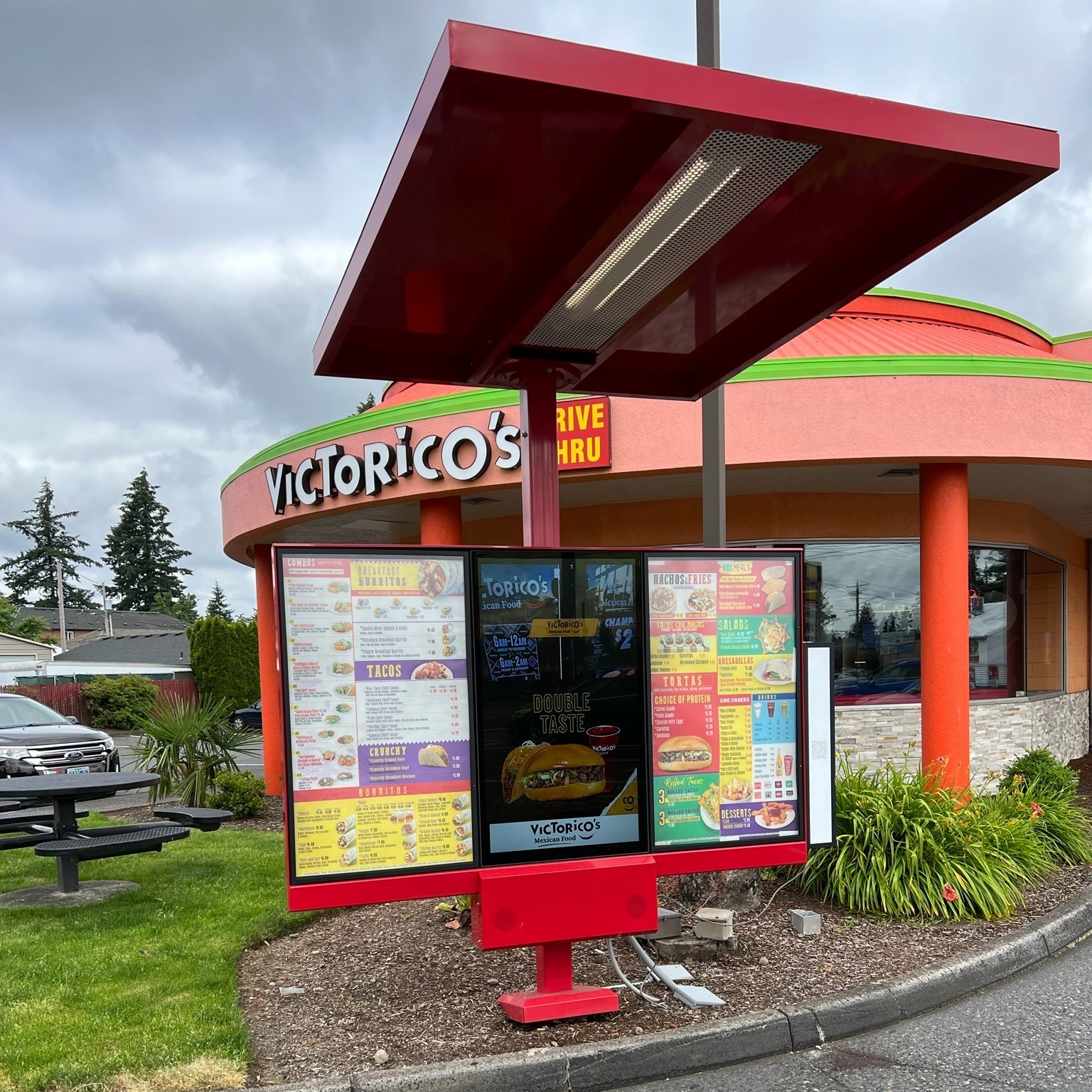
DT-FLEX-SDS-AIO (Hybrid)
What are wind load requirements for outdoor menu boards?
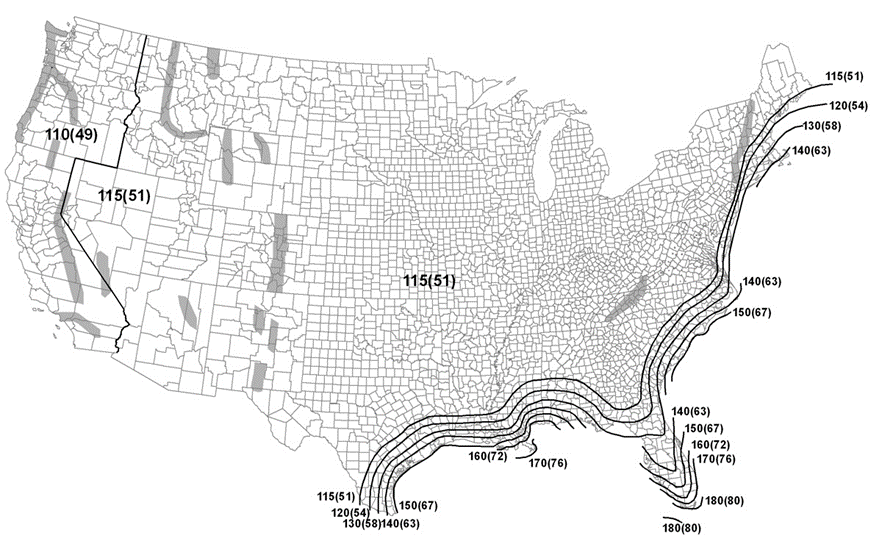
Outdoor drive-thru menu boards must be engineered to withstand the wind speeds defined by their local building code, typically referencing ASCE 7.
The required rating depends on geographic wind zone, exposure category, and mounting height. The Howard Company spec sheets list wind load ratings for every cabinet and digital display.
You are going to have to spend a little time researching your local code. The engineer will provide a drawing and calculation documentation meeting state requirements with a certified Engineering stamp. Additional requirements can be added at the local municipality level. Certified Structural Engineers may not know the unique nuances of each municipal code, so it is essential that anything beyond state and IBC requirements be part of the initial request. Failing to do this research at the outset could result in denied permits, additional costs, and construction delays.
Read the blog to learn more: https://www.howardcompany.com/blog/wind-load-impact-on-drive-thrus
How do I know if I need a drive-thru canopy?
A drive-thru canopy makes sense when weather, lighting, or equipment exposure is regularly affecting your lane.
The clearest signals are customers getting soaked in rain or snow before they reach the speaker, glare or sun fade washing out your menu board during certain hours, the order point being too dark at night for comfortable ordering, or digital displays degrading faster than expected from constant sun and moisture.
If your lane slows down or backs up every time the weather turns, that is a canopy decision waiting to be made. Operators in high-rain, high-snow, or high-sun regions tend to see the fastest payback.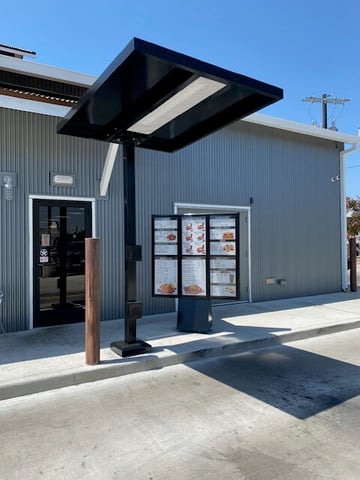
Flat Top Canopy with speaker & DT-Choice Drive Thru Menu System
Can a preview board increase average ticket size?
Yes. By promoting limited-time offers, combos, and high-margin items before the order point, a preview board gives customers time to consider add-ons while there is still room in their order. Customers who decide early are more likely to try something new or upsize instead of defaulting to their usual at the speaker. That same early decision shortens the time each car spends at the order point, which helps move more cars through during peak periods.
Who are digital menu boards a good fit for?
Digital menu boards are a strong fit for drive-thrus that change their menu often, run limited-time offers or dayparts, or operate multiple locations. They let you update promotions, prices, and dayparts instantly with no downtime, no reprints, and no tools. Static menu boards remain a great, lower-cost option when your prices and items stay stable for long stretches, so the best choice really comes down to how often your menu changes.
Nunc interdum lacus sit
Fusce egestas elit eget lorem. Nunc nonummy metus. Curabitur ullamcorper ultricies nisi. Aliquam eu nunc. Sed cursus turpis vitae tortor. In consectetuer turpis ut velit. Cras varius. Nullam sagittis.
Can I update digital menu boards across multiple locations at once?
Yes. With cloud based digital menu boards, you can push menu, pricing, and promotional changes to every location from one place, so a new special or price update appears the same way across all your stores at the same time. The Howard Company provides a handful of CMS options to find the best fit for your business and goals. This keeps branding consistent, removes the need to ship and install printed graphics at each site, and lets multi-unit operators roll out changes in minutes instead of days.
What is a drive-thru canopy?
A drive-thru canopy is an overhead structure installed at the order point or pickup window that protects customers and equipment from rain, snow, and sun. Most include integrated lighting and can hold digital signage, so the order point stays covered, well-lit, and functional in any weather. By keeping the order area comfortable and visible, a canopy helps the lane keep moving even when conditions turn bad.
A drive-thru canopy is an overhead structure installed at the order point or pickup window that protects customers and equipment from rain, snow, and sun. Most include integrated lighting and can hold digital signage, so the order point stays covered, well-lit, and functional in any weather. By keeping the order area comfortable and visible, a canopy helps the lane keep moving even when conditions turn bad.
Meet the Artist
Tosia Xiong

As one of The Howard Company's in-house designers, Tosia works with operators every day, and that experience gives him a clear picture of what they actually deal with out in the field.
So he created this series as a different kind of conversation starter. No spec sheet, no jargon. Just a cast of characters facing a unique situation and finding a solution, in a way that is fun to read and gets you thinking about what the right drive-thru setup looks like for you.
"My favorite part about turning a drive-thru topic into a comic is coming up with silly situations for these characters to thrive in. Whether that's plopping them into a rainy day or introducing them to new and unique problems, it's always fun to come up with how they will handle the situation."
SHARE