
Signage isn't a single purchase for a multi-unit brand, it's a capital program. Split it across separate vendors for fabrication, digital, installation, and service and every handoff becomes another place for a budget or a timeline to slip.
The Howard Company has run the opposite model since 1950: design, print, digital, installation, and service under one program, with one team accountable for the result. The signs below are what we typically see when a brand's vendor structure has outgrown itself.
This isn't unique to signage. McKinsey's research on tail spend found that 80 to 90 percent of the items a company buys account for only the bottom 10 to 20 percent of its total spend, with 5 to 15 percent in savings available once that category gets managed. Signage sits in that tail for most brands, which is why it sprawls quietly until somebody adds it up.
Below are five signs your current vendor structure is costing leadership more than it's saving, and what a consolidated model changes.
The 5 Signs
Sign 1 of 5
Your rollout timeline keeps moving
A rollout that slips more than once usually means no single vendor owns the schedule.
A three month rollout isn't a problem. A three month rollout that was supposed to take six weeks is.
The issue isn't speed, it's predictability. When no single vendor owns the calendar:
- Each one commits to its own piece, not to your finish date
- A slip in one scope isn't visible to the others until it's late
- Nobody can give you a real completion date, only their part of it
- Your capital plan moves every time one of them re forecasts
A schedule that accounts for holidays, trading hours, and production lead times only happens when one team sequences the whole program.
Sign 2 of 5
You have too many people to call to fix a problem
If you can't name one person to call when a display goes down, your accountability is split across vendors.
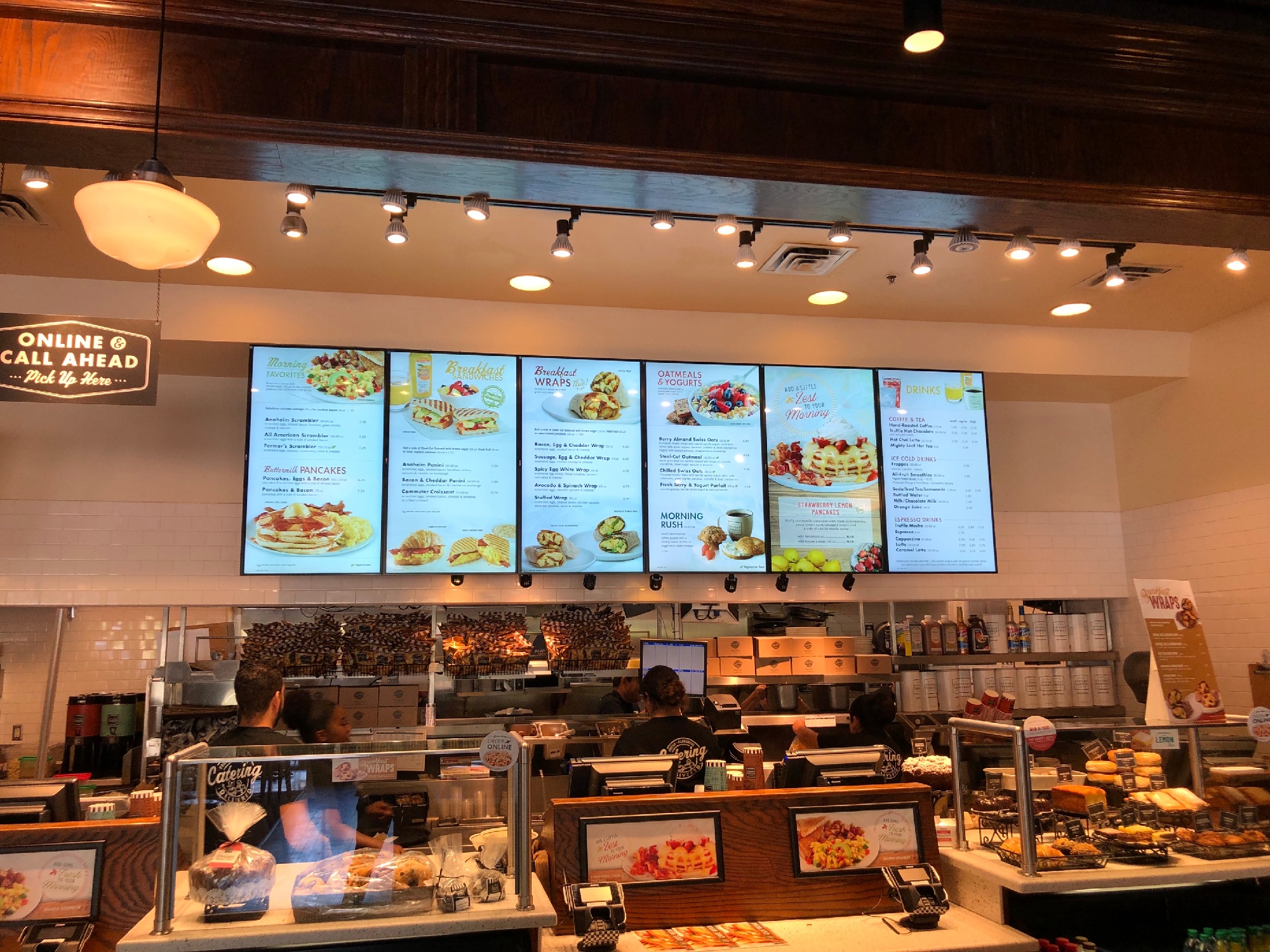
When one of your digital displays goes down during rush, the question isn't just how fast does this get fixed, it's who is even responsible.
Audit it honestly. Who would you call right now if:
- A board went dark?
- The price on it was wrong?
- The hardware behind it failed?
Three different answers means you have found a real gap.
What closes it is putting supply, content management, and service in one place. Ask any partner two things: do you offer active monitoring services, and do you offer after hours support. Menu boards don't fail politely between nine and five.
Sign 3 of 5
You are the one coordinating between your vendors
When four vendors each own a piece, you become the project manager by default.
Nobody ends up with four vendors on purpose. The print shop was there first. Digital came from a specialist. Someone else handles exterior signage, and installation gets subbed out from there.
Each does its piece well. Multiple vendors to coordinate with means:
- Multiple timelines
- Multiple sets of requirements
- Multiple invoices
Every gap becomes an email thread with your name on it, and you are the only person in it who can see the whole picture.
Sign 4 of 5
Brand consistency breaks down store to store
Brand drift happens when each vendor applies your standards through its own capabilities instead of a shared spec.
You end up relaying one partner's specs or going back to whoever designed a piece because it doesn't line up with whoever manages the content. A few examples:
- A digital LTO built at five seconds by a vendor who knows design, but not menu boards. So it goes back for a rebuild and you're rushing turnaround before launch.
- Running on multiple different CMS platforms, each vendor with different capabilities.
- Installs that don't match because different crews are doing them
One vendor sees the whole picture, not just a piece, and those little misses come from unfamiliarity, not incompetence.
Sign 5 of 5
You can't get a straight, comparable cost per location
If it takes four invoices to answer what one location costs, your vendor structure is hiding the number.
Fragmented vendors mean fragmented invoicing, markups, and change orders. That makes a clean number per location hard to produce.
What one vendor will provide instead:
- A scope of work agreed in writing before anything gets built
- A quote based on that scope of work, showing all the pieces in one document
- Payment terms settled up front for the initial scope of work
The test is simple. If you can't tell your CFO what one location costs without opening four invoices and doing the math yourself, the structure is the problem.
Why Partner with Fewer Vendors?
That doesn't mean one company does everything itself. No signage partner fabricates every component and staffs a crew in every state. What changes is who manages those relationships. Choose a vendor who partners with others where it makes sense and does the coordinating, so you get one contact, one schedule, and one place accountability lands.
For leadership, that model turns signage from a vendor management problem into a program you can forecast, budget, and hold one partner accountable for.
Consolidation is not automatic. If your current vendors are each performing well and the handoffs between them are not actually causing delays or confusion, the cost and disruption of switching may not be worth it yet. This is worth evaluating honestly before signing anything.
The Scale to Back It Up

The Howard Company has run restaurant signage programs for single location operators through to mega chains.
Quick service and fast casual brands including Charley's Cheesesteaks, PJ's Coffee of New Orleans, and Golden Chick all order indoor signage, outdoor signage, print, and digital systems from one source.
One recent 62 location menu board program rollout:
- Coordinating install crews in parallel, peaking at 19 installs in a single week
- Production staggered at 15 units a week, starting three weeks before the first install
- Three months planned end to end, sequenced around the holidays and store trading hours
- One store installed overnight so it never had to close
- Print work and a custom menu board built to fit the layout those stores actually had
You can see examples of that work in The Howard Company's case studies.


SHARE